


In early December 2025, journalist Rachel Aviv published a story in the New York Times exposing the fabrications of the beloved neurologist Oliver Sacks. It is entitled, Oliver Sacks Put Himself Into His Case Studies. What Was the Cost? Aviv was granted access—for the first time—to Sacks’s voluminous journals (in the essay, he calculates that he wrote a million and a half million words in a year!). In those journals, Sacks regularly confesses to his intellectual crimes:
- Inventing or reshaping patients’ words and histories (i.e., fabrication and falsification)
- Sanitizing or “cleansing” patients’ darker traits
- Projecting his own fantasies and conflicts onto patients—what he called “symbolic exo-graphy”
- Letting empathy slide into something “too creative, or invasive, or possessive”
- Amplifying illness for the sake of insight or art
None of this is in dispute: Sacks admits to it all. Further, he expresses a deep sense of guilt, regret, and remorse. He writes that “a sense of hideous criminality remains (psychologically) attached” to his work, and that he has given patients “powers (starting with powers of speech) which they do not have,” acknowledging that “some details … were ‘pure fabrications.’” It is not just that Sacks did wrong; it is that he knew it both at the time and retrospectively. Readers will have to make their own meaning and assessments in the wake of these revelations.
But this post is not about adjudicating the intellectual crimes of Oliver Sacks. This post is about a topic that has been little discussed in the aftermath of the revelations around Sacks’s work: my interest is in the 50 years that Oliver Sacks was a patient of the renowned psychoanalyst Leonard Shengold. Here is how Sacks describes his time with Shengold in an interview conducted four years prior to his death:
Now, I have been seeing Dr. Shengold for, well, more than 46 years. I saw him this morning. Perhaps I should say that I am speaking in 2011, and that I first saw him in January of 1966. No doubt this is one of the longest analyses on record—or at least, I like to think so, and I think also we’re beginning to get somewhere now. Link
Two things are worth noting about this quotation (and this is evident when seeing and listening to the actual video). First, he seems to take—at least to my mind—an odd bit of satisfaction in the claim that his therapeutic relationship is one of the “longest analyses on record—or at least, I like to think so.” There is certainly no shame in a lengthy therapeutic relationship, but why pride? And given the revelations of Sacks’s fabrications, it is… interesting that whether it is, in fact, one of the longest on record, he would like to imagine it as so. Second, though he is completely deadpan about it, he makes the classic joke that analysts and their patients make about the lengthy duration of a course of psychoanalysis: “I think also we’re beginning to get somewhere now.”
What ought we to make of a half century of a therapeutic relationship between these two men? Sacks first met with Shengold in 1966 as a 33-year-old. He proceeded to meet with Shengold twice a week for 48 years, at which point he came out of the closet at 80. He had an intimate relationship with a writer named Bill Hayes over the last six years of his life. From 33 until 75—when he met Hayes—he was celibate.
It is certainly not my job to judge. Oliver Sacks lived an extraordinary life. He published 19 books over his career. One of his books, Awakenings, was made into a well-regarded film, and in it he was portrayed by Robin Williams—loved by the public in a way not dissimilar to their love of Sacks himself. Sacks is regularly referred to in ways that speak to the regard in which he was held:
- The poet laureate of neurology
- The poet laureate of medicine
- The poet laureate of contemporary medicineBy most metrics, Sacks led a wildly successful life.
How many of us will ever be known by the title the poet laureate of… something? And yet, the inciting incident of his adult life is an encounter with his mother as an eighteen. Aviv describes the encounter as follows:
Sacks’s mother, a surgeon in London, had suspected that her son was gay when he was a teenager. She declared that homosexuality was an “abomination,” using the phrase “filth of the bowel” and telling him that she wished he’d never been born. They didn’t speak of the subject again.
My question is the following: given the animating theses of psychoanalysis, was the course of therapy offered by Dr. Shengold and received by Dr. Sacks successful?
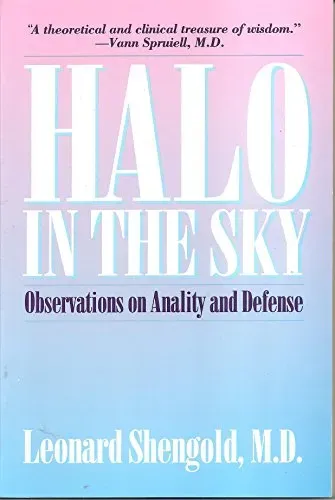
Let me refer to Shengold’s own work as a starting point to my question (referenced in Aviv’s essay, from his amazingly titled 1988 book, Halo in the Sky: Observations on Anality and Defense). He writes:
Freud began his observations of psychopathology with a focus on the traumatic as it gives rise to the pathogenic repressed.
I end Part 1 of this exploration with the pieces set up on the board in an almost cartoonishly psychoanalytic way:
- The foundational principle of psychoanalysis: the pathogenic repression of early trauma
- A young man living in a sexually repressive context—1950s England—who experiences desire for another man
- In 1950s England, the war hero and generationally important mathematician and computer scientist, Alan Turing, took his own life after being persecuted by the same government he had helped defeat the Nazis a decade previous.
- A young man living in a sexually repressive family of origin
- Orthodox Judaism.
- His mother, Muriel Sacks—herself a pioneering figure in the history of medicine—communicated to young Oliver, in what has been described as “Deuteronomical cursings” (link), that his sexual desires were “filth of the bowel.” Muriel Sacks expressed to her son that the manner in which he loved and desired another was shit.
- They never spoke about the matter again.
- Oliver leaves England for the U.S. to pursue his career in neurology.
- In 1966, he meets Leonard Shengold, psychoanalyst.
- Sacks and Shengold engage in a nearly 50-year therapeutic relationship.
- Forty-three years after starting therapy—which he attended twice weekly—Sacks breaks his celibacy and starts a relationship with Bill Hayes.
- At the beginning of this relationship, his mother had been dead for 37 years.
- He came out publicly in 2013, two years before his death.

